So, you’ve decided it’s time to find an estate planning lawyer. Typing “estate planning lawyers near me” into a search bar is a common first step, but finding the right one—someone who genuinely understands your family’s needs—is about more than just proximity. You’re looking for a partner to navigate Ontario’s specific laws, like the Succession Law Reform Act, and help you craft solid wills and powers of attorney.
Starting Your Search for the Right Ontario Estate Lawyer
Kicking off the search for a lawyer in the Greater Toronto Area, from Burlington to its neighbouring communities, is the first real step in protecting your assets and your family’s future. A quick online search will give you a list of names, sure, but a more deliberate strategy will land you a much better fit. It’s all about moving past the sponsored ads and using trusted resources to build a solid shortlist.
Before you even start dialling, a great first move is to have a frank conversation with your parents about their wishes. Broaching the topic can feel tricky, but starting with some thoughtful questions to ask your aging parents can make those conversations a whole lot smoother.
Tapping into Professional Networks
Honestly, one of the best ways to find a great estate lawyer is to ask the other professionals you already lean on. Your accountant, your financial advisor, even your family doctor—they often have a trusted network of specialists they’ve worked with for years.
Think about it: these professionals see the results of legal work firsthand. An accountant who has navigated a complex estate with a lawyer knows exactly who is sharp, responsive, and easy to work with. Their recommendation is based on actual professional experience, not just a five-star online review.
A trusted referral is often the gold standard. Professionals stake their own reputation on the quality of their recommendations, giving you an added layer of confidence in the lawyer’s capabilities and professionalism.
Using the Law Society of Ontario
The Law Society of Ontario (LSO) is your official, unbiased source for vetting lawyers in the province. It’s the governing body, so their information is the real deal. You can use the LSO’s online Lawyer and Paralegal Directory to confirm that any lawyer you’re considering is properly licensed and in good standing.
Even better, the LSO offers a fantastic public resource called the Law Society Referral Service. It’s designed to connect people like you with the right legal help.
Here’s how it works:
- You submit a request for a lawyer who focuses on “Wills and Estates.”
- The service matches you with a lawyer in your area.
- The best part? This referral comes with a free consultation for up to 30 minutes.
This is a no-risk way to have a real conversation with a qualified lawyer. You can ask your initial questions and get a sense of their personality and approach, all without opening your wallet. It takes the guesswork out of the process and puts you in direct contact with someone who has the right expertise.
To get the most out of that initial chat, it helps to be prepared. This estate planning checklist for Canada can give you a great head start on what you’ll need to think about.
Alright, you’ve got a shortlist of potential lawyers. Now comes the crucial part: making sure they have the right expertise for your specific needs. This isn’t just about finding a good lawyer; it’s about finding the right lawyer to protect your family’s future.
A lawyer who drafts a simple will now and then is worlds apart from someone who lives and breathes estate planning. For straightforward situations, a general practitioner might be fine. But if you have a business, a blended family, or complex assets, you need a specialist.
Checking the Essentials: The Law Society of Ontario
Before you go any further, your first stop should be the Law Society of Ontario (LSO). This is the official governing body for every lawyer in the province.
Their online directory is an invaluable tool. In just a few seconds, you can confirm a lawyer is properly licensed, insured, and see if they have any public disciplinary history. It’s a simple step that provides instant peace of mind.
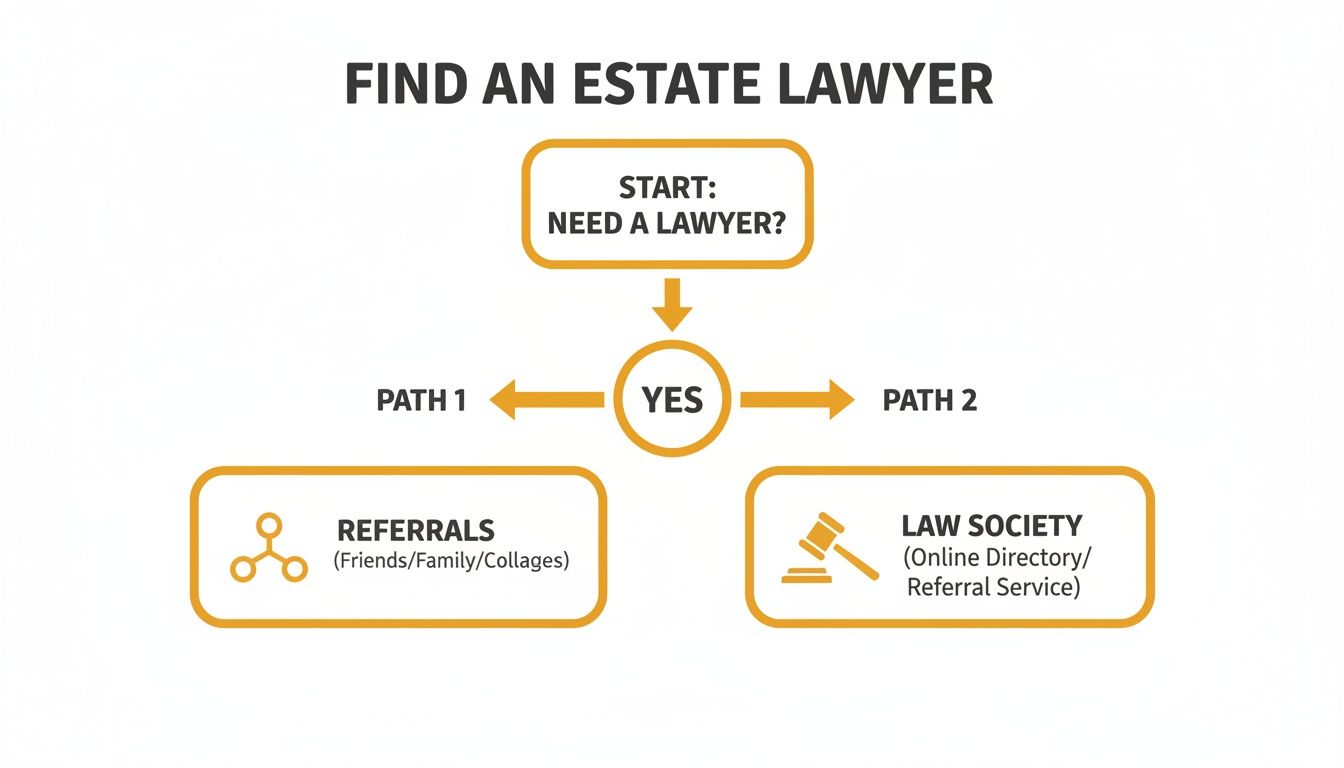
As you can see, whether you start with a personal referral or an official directory, the path always leads to this vital vetting process.
Spotting a True Specialist
Once you’ve confirmed they’re in good standing with the LSO, it’s time to dig into their actual experience. How can you tell if someone is a dedicated estate expert or just a dabbler?
Think about these two scenarios:
- Scenario A: A young professional with no dependants and a few simple assets like an RRSP and a savings account. They mainly need a will and powers of attorney.
- Scenario B: A blended family with children from previous marriages, a family-owned business, and a cottage. Their situation requires careful trust planning, business succession advice, and strategies to minimize tax.
A general practitioner can likely handle Scenario A without any issues. But Scenario B is squarely in specialist territory. It demands a deep understanding of trusts, corporate law, and the specific tax implications under Ontario’s legislation.
Pro Tip: Look for the Certified Specialist (Estates and Trusts Law) designation from the LSO. This isn’t a marketing gimmick. It’s a formal certification awarded to lawyers who have demonstrated advanced knowledge, met high experience standards, and earned peer recognition in this exact field.
Here’s a quick comparison to help you decide what level of expertise you might need.
General Practitioner vs. Estate Specialist: What to Look For
| Area of Focus | General Practitioner | Estate Planning Specialist |
|---|---|---|
| Typical Practice | Handles a wide range of legal areas (e.g., real estate, family law, wills). | Focuses exclusively or primarily on wills, trusts, and estate administration. |
| Experience Level | Drafts standard wills and powers of attorney. | Deals with complex issues daily: trusts, tax planning, business succession, incapacity. |
| Knowledge Base | Understands the basics of the Succession Law Reform Act. | Has in-depth knowledge of tax law, trust variations, and probate minimization strategies. |
| Best For | Simple estates with straightforward assets and beneficiaries. | Blended families, business owners, individuals with significant assets, or beneficiaries with special needs. |
Choosing the right professional from the start saves you from potential headaches and ensures your plan is as solid as it can be.
Why Niche Expertise Really Matters
You wouldn’t ask your family doctor to perform open-heart surgery, right? The same logic applies to law. An estate planning specialist has seen it all and knows what questions to ask—often uncovering potential problems you hadn’t even considered.
A true specialist will proactively guide you through:
- Tax Minimization: How to structure your estate to reduce the Estate Administration Tax (often called probate fees in Ontario).
- Incapacity Planning: The critical differences between a Power of Attorney for Property and one for Personal Care, and when each is needed.
- Complex Beneficiary Needs: Setting up trusts to protect an inheritance for a minor child, a beneficiary with a disability, or someone who might not manage a lump sum wisely.
This is the kind of forward-thinking advice that separates a simple document-drafting service from genuine, comprehensive estate planning. You can see how this specialized focus plays out by looking into the backgrounds of our legal team and how their experience shapes their approach.
Ultimately, taking the time to vet a lawyer’s expertise ensures your wishes are not just written down, but legally protected for the future.
Getting the Most Out of Your First Meeting

Think of the initial consultation as a two-way interview. It’s your chance to size up a potential lawyer and decide if they’re the right person to handle your family’s future. While they’re getting a feel for your needs, you should be paying close attention to their expertise, how they communicate, and their overall approach.
Walking into that meeting prepared can make all the difference. It turns a simple meet-and-greet into a genuinely productive session, saving everyone time and giving you the clarity needed to make a solid choice.
What to Bring for a Productive Conversation
To really dive deep and get advice that’s actually useful, you’ll want to have some key information with you. When a lawyer can see the real picture, they can stop talking in hypotheticals and start giving you specific, practical guidance.
Try to gather these items before you go:
- Your Current Plan: If you have any existing documents—an old will, powers of attorney, trust papers—bring them along.
- A Snapshot of Your Finances: You don’t need a formal balance sheet. Just a straightforward list of your major assets (home, investments, RRSPs, any business interests) and significant debts will do the trick.
- Your “Who’s Who” List: Jot down the full legal names and contact details for everyone you plan to include, like beneficiaries, your executor, or attorneys for property and personal care.
- Your Questions and Goals: Make a list of what you want to achieve and any specific worries you have.
Having this ready shows the lawyer you’re serious and allows for a much richer discussion from the get-go. For a bit more background, you might find our guide on how to make a will in Ontario helpful.
Questions That Reveal Real Expertise
Talking about fees is important, but you need to dig deeper. Asking the right questions can reveal a lot about a lawyer’s process, experience, and whether they’re the right fit for your specific circumstances.
Here are a few questions I always recommend asking:
- “Looking at my situation, what potential roadblocks or challenges do you see, and how would you suggest we navigate them?”
- “What’s your process for keeping clients in the loop? How often will I hear from you?”
- “If my personal situation changes while we’re drafting the documents, how do you handle making adjustments?”
Pay close attention to how they answer. A good, experienced lawyer will give you clear, thoughtful responses and will probably ask you clarifying questions in return.
At the end of the day, the most crucial part of this meeting is how you feel. Do you feel heard? Respected? Are you confident this person can handle not just the paperwork, but the sensitive family issues that are almost always part of estate planning?
Understanding Their Approach to Family Dynamics
Estate planning is never just about money and property; it’s about people. A lawyer’s skill in navigating tricky family situations is every bit as important as their legal knowledge. This is especially true if you have a blended family, a child with special needs, or strained relationships to consider.
Don’t be shy about asking them directly. You could say something like, “Our family situation is a bit complicated. Can you tell me how you help clients build a plan that avoids causing conflict down the road?”
Their answer will tell you a lot about their experience and emotional intelligence—two qualities you absolutely want in someone handling your legacy.
Understanding Legal Fees and Retainer Agreements

Let’s talk about the elephant in the room: the cost. When you’re searching for “estate planning lawyers near me,” worrying about the final bill is completely normal. A good lawyer knows this and will be upfront about their fees from the very first conversation.
Knowing how lawyers in Ontario typically charge for their work helps you avoid surprises and allows you to focus on what really matters—getting your plan right.
Common Fee Structures in Ontario
When it comes to estate planning, you’ll generally run into two types of billing.
For most people, the go-to is a flat-fee package. This is exactly what it sounds like: one set price for a bundle of core documents, usually your Will and your Powers of Attorney for Property and Personal Care. It’s clean, predictable, and perfect for individuals or couples whose finances aren’t overly complicated.
Think of a Burlington couple with a home, some RRSPs, and a couple of kids. Their situation is fairly standard, so a lawyer can confidently offer them a single, all-in price to get their complete estate plan in place.
The other method is billing by the hourly rate. You’ll see this more often when things get complex. If you need to plan for business succession, set up multiple family trusts, or work through tricky family situations, the lawyer will bill for the time they spend navigating those details. Hourly billing is also the norm for the work involved in administering an estate after someone passes away. One significant cost to keep in mind for estate administration is the Estate Administration Tax; our probate fees calculator for Ontario can give you a solid estimate.
The Role of the Retainer
No matter how you’re being billed, you’ll be asked to sign a retainer agreement. This document is much more than just an invoice. It’s the official contract that kicks off your professional relationship with the law firm. It sets the ground rules for everything.
A retainer agreement is your roadmap. It should clearly define the scope of the work, the fee structure, communication expectations, and how any funds you provide (the retainer fee) will be managed. Read it carefully before signing.
This agreement will spell out what services are covered and—crucially—what falls outside that scope. The “retainer fee” is a separate thing; it’s the down payment you provide, which the firm holds in a trust account. As your lawyer completes work, they draw from these funds to pay your invoices. It’s essentially a deposit to secure their time and cover the initial work on your file.
A solid retainer agreement should leave no room for doubt and clearly outline:
- The precise flat fee or the lawyer’s hourly rate.
- A detailed description of the services you’re paying for.
- How extra costs (called disbursements), like courier charges, are billed.
- The conditions under which you or the lawyer can end the relationship.
You should feel completely comfortable with the financial side of things before moving forward. Any lawyer worth their salt will walk you through their fees and the retainer agreement, ensuring you understand every line item before you commit.
Critical Red Flags: Spotting the Wrong Lawyer Before You Hire
Choosing the lawyer who will draft your estate plan is fundamentally about trust. A great lawyer brings peace of mind; the wrong one can leave a legacy of costly mistakes and family conflict. Knowing what warning signs to look for from the very beginning is the best way to find a true advocate for your family.
The good news is that most red flags pop up during the initial consultation. This gives you the perfect opportunity to thank them for their time and walk away, confident you’ve dodged a bullet.
Communication Breakdowns and Radio Silence
Pay close attention to how a lawyer communicates right from the start. If your initial email or phone call goes unanswered for days, or if replies are consistently short and dismissive, take it as a serious warning. This isn’t a habit that magically gets better once you’re a paying client.
A solid estate plan is a collaboration. You need a lawyer who is available, engaged, and willing to answer your questions clearly. A lawyer who is hard to reach isn’t just an annoyance; they’re a liability who could easily miss critical details about your wishes.
Vague Pricing and Pushy Sales Tactics
Fee transparency is non-negotiable. If a lawyer gets evasive when you ask about their costs, can’t provide a clear fee structure, or hesitates to put anything in writing, it’s time to be concerned. A reputable professional will have no issue clearly explaining their flat-fee packages, their hourly rates, and exactly what’s included.
Watch out for anyone who tries to rush you into signing on the spot. A good estate lawyer knows this is a big decision and will give you the space to make it.
High-pressure sales tactics are a clear red flag. You should never feel rushed or pushed into complex, expensive strategies that don’t seem to match your actual needs. The goal is to create a plan that serves you, not one that inflates a legal bill.
A “One-Size-Fits-All” Approach
Estate planning is deeply personal. If a lawyer seems disengaged or uninterested in your unique family dynamics, your financial situation, or your long-term goals, they’re not the right fit. Generic, cookie-cutter solutions are a sign that they lack the depth to build a plan that truly protects you.
This is especially critical if you have a more complex situation, like a blended family, a family business, or a child with special needs. These circumstances demand a customized strategy to head off future disputes. Poor planning up front can lead to painful and expensive conflicts, sometimes forcing loved ones to figure out how to contest a will in Ontario.
Here is a quick checklist you can use to assess potential lawyers during your consultation.
Warning Signs vs Positive Indicators in an Estate Lawyer
| Characteristic | Red Flag (Avoid) | Green Flag (Proceed) |
|---|---|---|
| Communication | Slow to respond; uses confusing jargon; dismisses your questions. | Prompt and clear communication; explains complex ideas simply. |
| Fees & Pricing | Vague about costs; high-pressure tactics; unwilling to provide a written fee agreement. | Transparent, upfront pricing; provides a clear breakdown of all costs. |
| Expertise | Offers generic advice; seems unfamiliar with your specific concerns (e.g., business succession). | Asks detailed, probing questions; has clear experience with situations like yours. |
| Engagement | Seems distracted or disinterested; checks their phone during the meeting. | Listens attentively; takes notes; makes you feel heard and understood. |
| Professionalism | Disorganized office; misses scheduled call times; speaks poorly of past clients. | Punctual and prepared; professional demeanour; respects client confidentiality. |
At the end of the day, listen to your gut. If a lawyer just doesn’t feel right, they probably aren’t. The right professional will make you feel confident, respected, and secure in the process of planning your family’s future.
Your Top Estate Planning Questions Answered
Diving into estate planning can feel overwhelming, and it’s natural to have a lot of questions. I get it. To help clear things up, here are some straightforward answers to the questions I hear most often from clients in Burlington and across Ontario.
What’s the Typical Cost for a Basic Will Package in Ontario?
This is usually the first question people ask, and for good reason. While every law firm has its own fee structure, most offer a flat fee for a standard estate plan.
For an individual, this package usually includes a will plus the two essential powers of attorney (one for property, one for personal care). You can generally expect this to cost between $750 and $1,500.
If you’re a couple, a similar package will likely run from $1,000 to $2,500. Just remember, these prices are for relatively straightforward estates. If your situation is more complex—say, you own a business, have a blended family, or want to set up trusts—the lawyer will need to give you a custom quote.
What’s the Difference Between a Will and a Power of Attorney?
This one trips a lot of people up, but the distinction is simple and crucial. Think of it this way: a will is for after you’re gone, and a power of attorney is for while you’re still here.
Your will is a legal document that only kicks into gear after you die. It’s your instruction manual for your executor, detailing who gets what and who will care for any minor children.
A Power of Attorney (POA), on the other hand, is for when you’re alive but can’t make decisions for yourself. In Ontario, we have two separate kinds: one for managing your finances (Property) and another for making health decisions (Personal Care).
Are Those Online Will Kits a Safe Bet in Ontario?
I understand the appeal—they seem cheap and easy. But honestly, they come with huge risks. These one-size-fits-all templates often miss the very specific requirements of Ontario’s Succession Law Reform Act.
What does that mean for you? It means you could end up with a will that’s improperly witnessed, ambiguous, or completely invalid.
I’ve seen it happen time and again: the money a family saves on a DIY will is dwarfed by the legal fees required to fix it in court later. Working with a lawyer from the start ensures your plan is solid, reflects what you actually want, and saves your family from a world of stress and expense.
How Often Should I Update My Will?
Life changes, and your estate plan needs to change with it. A good rule of thumb is to pull out your documents for a review every 3-5 years.
More importantly, you need to update your plan immediately after any major life event. Getting married, separated, or divorced? Have a new baby? Has an executor or beneficiary passed away? These are all triggers for an immediate call to your lawyer.
Big financial shifts are another reason to update your plan. As you get deeper into your planning, it’s also helpful to understand the fundamental differences between a living trust and a will so you can have a more informed conversation with your lawyer. Keeping your will current is the only way to make sure it actually does what you intend it to do.
Your family’s future is too important to leave to a template or a guess. At UL Lawyers, our team is here to walk you through the entire estate planning process with genuine care and clear advice. We’re proud to help clients in Burlington, the GTA, and all across Ontario. Get in touch today for a consultation and let’s secure your legacy. https://ullaw.ca