Losing your job, being handed a confusing contract, or finding yourself in a toxic work environment can be incredibly stressful. It’s easy to feel overwhelmed and unsure of what to do next. You might even second-guess yourself, wondering if the problem is “bad enough” to call a lawyer. But here’s the thing: waiting too long can sometimes close the door on your best options for a fair resolution.
For many people in Hamilton and across the Greater Toronto Area (GTA), figuring out the right time to pick up the phone is the single most important step in protecting their career and livelihood.
Identifying When You Need an Employment Lawyer in Hamilton
Think of an employment lawyer like a specialist you see when you notice symptoms of a serious problem. Certain workplace situations are more than just minor annoyances; they’re red flags. Ignoring them can mean losing out on compensation you’re owed, enduring unnecessary stress, or missing your chance to stand up for your rights under Ontario law.
These problems often crop up when the power balance feels completely tipped in the employer’s favour. A good lawyer doesn’t just give advice; they help level that playing field, making sure your side of the story is heard and respected.
Key Triggers for Legal Consultation
Some events are so significant that they should immediately have you thinking about getting professional advice. We’re not talking about small disagreements, but major moments that put your financial and professional well-being at risk.
Here are the most common situations where a Hamilton employment lawyer is absolutely essential:
- Reviewing an Employment Contract or Severance Offer: Never sign a legal document from your employer without being 100% sure what it means for you. A lawyer can spot unfair clauses, negotiate for better terms, and make sure a severance package reflects not just the minimums in the Employment Standards Act, 2000 (ESA), but also your full entitlements under common law.
- Experiencing Wrongful Dismissal: If you were let go without proper notice or pay, or for a reason that just doesn’t add up, you might have a claim. This is especially true for “with cause” terminations where the employer’s reasons feel flimsy.
- Facing Workplace Harassment or Discrimination: No one should have to put up with this. If you’re dealing with ongoing harassment or discrimination based on protected grounds in the Ontario Human Rights Code (like age, disability, creed, or gender identity), it’s illegal. A lawyer can show you the path to holding your employer accountable.
- Navigating Constructive Dismissal: This is a tricky one. If your employer unilaterally makes a huge, negative change to your job—like slashing your pay, demoting you, or forcing a relocation—it can be legally considered a termination.
Hamilton’s Growing Workforce and Legal Needs
Hamilton’s job market is dynamic and part of a larger, thriving economic region in Southern Ontario. As industries evolve and the workforce grows, the potential for workplace disputes inevitably increases.
The decision to consult a lawyer is often the most empowering step an employee can take. It shifts the dynamic from uncertainty to action, providing you with a clear understanding of your legal standing and a strategic path forward.
At the end of the day, trust your gut. If a situation at work feels fundamentally unfair or leaves you at a serious disadvantage, that’s your cue to get a professional opinion. Many people hesitate, but an initial chat can bring incredible clarity. If you’re on the fence, learning what happens during an employment attorney free consultation can help you feel more prepared to make that call.
What Kinds of Problems Do Employment Lawyers Handle?
Workplace disputes can be incredibly stressful and confusing. It’s often hard to tell if you’re just having a bad week or if your legal rights have actually been violated. Getting a handle on the most common issues that land people in an employment lawyer’s office in Hamilton can help you spot the red flags and know when it’s time to get professional advice.
Most workplace legal issues tend to pop up at three key moments: when a job ends, during your day-to-day work, or right at the start when you’re hired. Ontario law has specific rules for each of these stages, and knowing the basics is your first line of defence.
When Your Job Ends Suddenly
By a long shot, the end of a job is the number one reason people call a lawyer. The shock of being let go is quickly followed by a wave of questions about your rights and what you’re owed. This is a critical moment where you need to be absolutely clear on your entitlements.
Here are the most common scenarios we see:
- Wrongful Dismissal: This is a huge area of employment law, but the term can be misleading. It doesn’t necessarily mean you were fired for an unfair reason. In Ontario, it usually means your employer didn’t give you enough notice of termination or the proper pay instead of notice. The minimums set out in the Employment Standards Act, 2000 (ESA) are just that—a minimum. The common law often entitles you to a much more generous notice period.
- Low-Ball Severance Packages: It’s a classic move: an employer hands a terminated employee a severance offer with a tight deadline, hoping they’ll sign it without thinking. These initial offers are often far less than what an employee is legally owed. A lawyer can properly assess the offer based on your age, how long you worked there, your position, and other factors to make sure it’s fair.
- Constructive Dismissal: This is what happens when your employer makes a drastic, negative change to your job without your agreement, essentially forcing you to quit. Think of a major pay cut, a demotion, or a complete change in your responsibilities. You can learn more about how this connects to your rights and what is wrongful dismissal in Ontario.
Protecting Your Rights While on the Job
Your legal protections don’t just kick in when you’re fired. You have fundamental rights that need to be respected every single day you’re on the clock. When an employer fails to create a safe, fair, and respectful workplace, it can quickly turn into a legal problem.
These issues are all about safeguarding your well-being and dignity at work, and your employer has a legal duty to take them seriously.
An employee’s right to a safe and non-discriminatory workplace isn’t a perk; it’s a fundamental requirement under Ontario’s Human Rights Code and the Occupational Health and Safety Act. Employers who ignore these obligations open themselves up to significant legal liability.
Some of the key problems that crop up during employment include:
- Workplace Harassment and Bullying: This covers any course of vexatious comment or conduct against a worker that is known or ought reasonably to be known to be unwelcome.
- Discrimination: In Ontario, it’s illegal for an employer to treat you unfairly based on protected grounds like your age, disability, race, creed, sex, gender identity, or ethnic origin.
- Failure to Accommodate: Employers have a duty to accommodate an employee’s needs related to a disability or another protected ground, up to the point of “undue hardship.” This might involve providing modified work duties, flexible hours, or special equipment.
To give you a clearer picture, here’s a quick summary of some of the most frequent legal issues that come up in Ontario workplaces.
Common Employment Law Issues in Ontario
| Issue | Governing Ontario Law | Common Scenario Example |
|---|---|---|
| Wrongful Dismissal | Employment Standards Act, 2000 & Common Law | An employer terminates a 10-year employee and offers only the minimum 8 weeks of pay required by the ESA, ignoring their much larger common law entitlement. |
| Workplace Harassment | Occupational Health & Safety Act | A manager consistently makes demeaning comments and jokes at an employee’s expense in front of colleagues, creating a hostile work environment. |
| Discrimination | Human Rights Code | A qualified candidate is passed over for a promotion in favour of a younger, less-experienced colleague after mentioning they need accommodation for family status. |
| Constructive Dismissal | Common Law | An employer unilaterally cuts a salesperson’s commission rate in half, drastically reducing their income potential and fundamentally changing the job. |
This table just scratches the surface, but it highlights how specific laws protect you in very real, everyday situations. Understanding these basics is the first step toward advocating for yourself.
Starting a New Role with Confidence
Believe it or not, the best time to prevent a future workplace problem is right at the very beginning. The employment contract you sign when you take a new job can dictate your rights for years to come, especially if things go sour.
Getting legal advice at this stage isn’t an overreaction; it’s a smart, proactive investment in your career.
A lawyer can review your contract and help you negotiate fairer terms, flagging any clauses that could cause trouble later on. This includes scrutinizing termination clauses, non-competition agreements, and bonus plans to make sure they’re clear and legally enforceable in Ontario. Of course, while protecting your rights is crucial, so is maintaining professionalism. For instance, following tips on writing a professional resignation letter when you decide to leave a role can ensure a smooth exit and prevent burning bridges.
Your Basic Protections Under Ontario’s ESA
Think of Ontario’s employment laws as a two-layer safety net. The first, most basic layer is the Employment Standards Act, 2000 (ESA). This is the legislation that sets the absolute minimum standards for most workers in the province—things like wages, hours of work, and public holidays.
This legislation is the law. An employer can’t legally offer you less than what the ESA promises, even if you sign a contract agreeing to it. It’s the baseline protection for almost everyone working in Ontario, whether you’re in Hamilton, Burlington, or anywhere else in the province.
But here’s something many people don’t realize: these minimums are often just the starting point. That’s where the second, much stronger layer of protection comes in: the common law. An experienced employment lawyer in Hamilton helps you navigate both layers to make sure you get everything you’re actually entitled to, which is often far more than just the basic ESA minimums.
The Foundation Your Rights Are Built On
The ESA provides the essential groundwork for your rights at work. It’s designed to be a straightforward guide covering the core parts of your job. While the full Act is a long document, every worker should understand its key protections.
These standards are the government’s way of making sure workplaces are fair and predictable. They lay down clear rules to prevent employers from taking advantage of their staff, especially when it comes to the fundamentals.
Here are the non-negotiable minimums you’re guaranteed under the Act:
- Minimum Wage: The ESA sets the lowest hourly rate an employer can legally pay. This rate is reviewed and updated by the Ontario government.
- Hours of Work and Eating Periods: The Act puts a cap on the maximum hours you can be required to work in a day or week. It also guarantees you get necessary breaks, like a 30-minute meal break after working five consecutive hours.
- Overtime Pay: For most jobs, working more than 44 hours in a week means you’re entitled to overtime pay. That rate must be at least 1.5 times your regular pay.
- Public Holidays and Vacation: You’re entitled to public holiday pay and also earn paid vacation time. After one year with an employer, you are legally entitled to at least two weeks of vacation time, with pay calculated as 4% of your gross earnings.
These rules create a solid framework, but they only tell half the story—especially when a job ends.
Why the ESA is Just a Starting Point
Thinking the ESA is the final word on your rights is like looking at a house and only seeing its foundation. The foundation is critical, of course, but it’s not the whole structure. This is especially true when it comes to termination pay.
The ESA provides a simple formula for minimum notice, giving you one week per year of service, up to a maximum of eight weeks. This is the legal floor.
Common law is the rest of the house built on that foundation. It’s a body of law created over centuries from court decisions, and it almost always provides for a much longer notice period—and therefore more severance—than the bare-bones ESA minimums.
In a wrongful dismissal case, a good employment lawyer isn’t just focused on the ESA. Their main job is to argue for your entitlements under the common law. Courts look at factors like your age, length of service, the character of your employment, and the availability of similar employment. Based on this, they determine a “reasonable notice period” which can be many months, sometimes even over a year—far beyond the ESA’s eight-week limit.
This difference is probably the single most important concept in Ontario employment law. If you’ve been let go, understanding the massive gap between these two legal systems is crucial. To see how this plays out, you can learn more about how the Employment Standards Act handles termination and why a lawyer’s advice is so critical. Sticking only to the ESA could mean walking away from a significant amount of money you are rightfully owed.
Navigating the Legal Process with Your Lawyer
The idea of a legal fight can be intimidating. Most of us imagine dramatic courtroom showdowns we’ve seen on TV, but that’s rarely how employment law cases play out in Ontario. Once you team up with a Hamilton employment lawyer, you’ll follow a clear, methodical process aimed at resolving your issue—often without ever setting foot inside a courtroom.
Think of it as a roadmap. Each step builds on the last, and your lawyer is your expert guide, navigating the complex legal terrain so you can focus on what’s next for you. Knowing what this path looks like from the start can take a lot of the stress out of the equation and give you the confidence to stand up for your rights.
The First Step: The Consultation and Case Assessment
It all starts with an initial consultation. This first meeting is really a fact-finding mission. You’ll share your story and the details of what happened, and the lawyer will start to gauge the strength of your case. Be ready to talk about your job history, the specific events that led to the dispute, and bring any documents you have, like your employment contract or termination letter.
After that meeting, your lawyer gets to work on a deep-dive assessment. They’ll scrutinize your documents and compare your situation against Ontario’s Employment Standards Act, 2000 (ESA) and, just as importantly, against decades of common law. This is where they pinpoint what you’re legally entitled to and start mapping out a strategy to get you the best possible result.
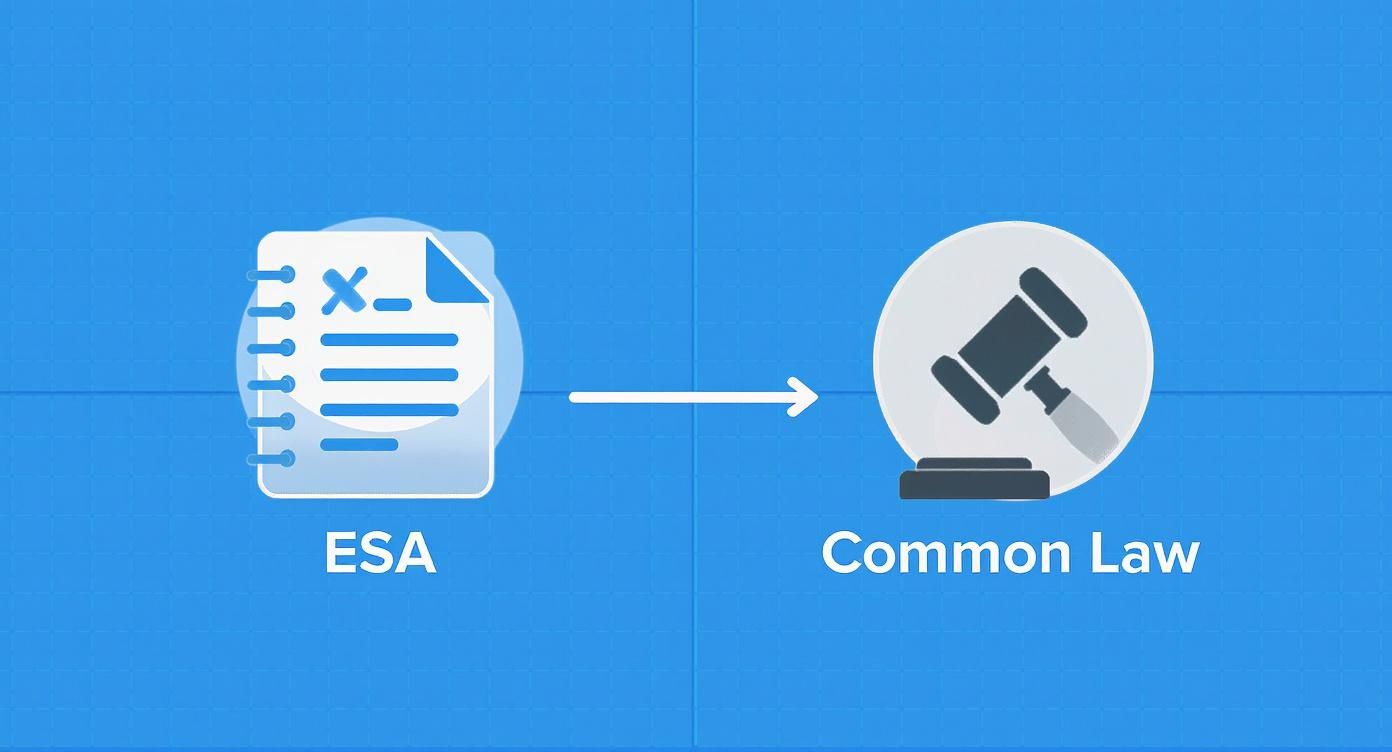
This image perfectly illustrates a key concept in Ontario employment law: the ESA sets the absolute minimum standards, but the common law often dictates what you are truly and fairly owed.
The Path to Resolution
With a solid strategy in place, the process unfolds through a few key stages. It’s important to know that the vast majority of employment disputes in Ontario get resolved long before a statement of claim is ever filed.
- The Demand Letter: This is usually the opening move. Your lawyer drafts a firm, professional letter to your former employer. It clearly lays out your legal position and demands a fair resolution, like a proper severance package. This letter is a powerful signal that you’re serious and have expert legal backing.
- Negotiation: Once the demand letter is sent, a period of negotiation almost always follows. Your lawyer and the company’s representative will talk back and forth, trying to hammer out a settlement that both sides can agree on.
- Mediation: If direct talks hit a wall, mediation is a very common next step. Here, a neutral third-party mediator joins the conversation to help you and your former employer find common ground. It’s a confidential and much more cost-effective way to settle things without the headache of going to court.
It surprises many people, but a well-written demand letter is often all it takes to get an employer to the table. It’s a powerful tool that can kickstart a productive negotiation and resolve the issue quickly.
If you’re curious about what you might be entitled to, especially after a termination, using a tool like this Severance Pay Calculator for Ontario can give you a ballpark figure to discuss during your consultation.
Litigation: The Final Resort
When all other attempts to find a resolution don’t work, the final option is litigation—which means filing a formal claim in court. While this is the least common route, sometimes it’s the only way to protect your rights. A key part of being prepared is understanding the basics of filing a case in a labour court. If it comes to this, your lawyer will handle every single detail, from drafting court documents to representing you at hearings.
Understanding the Cost: How Lawyers Get Paid
A good lawyer-client relationship is built on trust, and that includes being crystal clear about legal fees. In Hamilton, employment lawyers generally work with a few different fee structures.
- Contingency Fees: You pay nothing upfront. Instead, the lawyer takes a percentage of the final settlement or award you receive.
- Hourly Rates: You’re billed for the actual time the lawyer spends working on your file.
- Flat Fees: A single, fixed price is charged for a specific task, like reviewing an employment contract before you sign it.
This flexibility ensures that access to justice is not solely determined by your ability to pay upfront, which is crucial when you’re facing a sudden loss of income.
How to Choose the Right Hamilton Employment Lawyer

When you’re facing a problem at work, the most critical decision you’ll make is choosing the right legal advocate. This isn’t just about a quick online search for a lawyer; it’s about finding a true partner who understands Ontario law and your specific situation.
The right lawyer can turn a period of high stress and uncertainty into a manageable process with a clear path forward. You’re looking for someone with proven expertise, a history of success with cases just like yours, and a communication style that gives you confidence. It’s less about a fancy degree on the wall and more about genuine connection and trust.
Verify Their Exclusive Focus on Employment Law
First things first, you need a specialist. The world of law is massive, and a lawyer who dabbles in real estate one day and wills the next simply won’t have the deep, up-to-the-minute knowledge required for a complex employment dispute.
An employment lawyer who lives and breathes this area of law will be on top of the latest court rulings and legislative changes in Ontario. This isn’t just a job for them; it’s their entire professional focus, giving them a significant advantage in both negotiations and in the courtroom.
Look for a firm where employment law is a core pillar of their practice, not just another service on a long list. A great way to gauge this is to review their dedicated pages on employment law practice areas. This shows a real commitment to the field.
Assess Their Track Record and Relevant Experience
Not all employment cases are created equal. A lawyer who is a wizard at negotiating severance packages for executives might not be the best choice for a sensitive workplace harassment claim. Your initial consultation is your chance to dig into their actual, relevant experience.
Don’t be shy about asking direct questions about their history with cases that sound a lot like yours. For instance, have they successfully argued constructive dismissal claims in Ontario courts? How many human rights applications have they handled at the Tribunal? Their answers will tell you if they have the practical, hands-on experience you need.
Finding a lawyer is like hiring a guide for a difficult expedition. You wouldn’t hire a desert guide to lead you up a mountain. You need someone who knows the specific terrain you’re about to navigate.
The legal community in the Hamilton and Greater Toronto Area is well-established. This means you have excellent options to choose from, including firms recognized nationally for their expertise in labour and employment law.
Evaluate Their Communication Style and Client Relationship
Legal expertise doesn’t mean much if you can’t stand talking to your lawyer or can’t make sense of what they’re saying. The legal process can be a long haul, so you need someone who communicates clearly, respectfully, and consistently.
Pay close attention to how they interact with you during that first meeting. Do they actually listen to your story without cutting you off? Can they explain complicated legal concepts in plain English? You should feel like a valued partner, not just another case file on their desk.
To help you vet your options, it’s wise to go into your first meeting prepared with a few key questions.
The table below offers a straightforward checklist to help you evaluate potential lawyers during your initial consultation, ensuring you find the right fit for your case.
Key Questions to Ask a Potential Employment Lawyer
| Category | Question to Ask |
|---|---|
| Experience & Specialization | What percentage of your practice is dedicated to employment law for employees? |
| Case History | Can you describe your experience with cases similar to mine in Ontario? |
| Strategy & Approach | Based on what I’ve told you, what would be your initial strategy for my case? |
| Communication | How will I be kept updated on the progress of my case, and who will be my main point of contact? |
| Fees & Billing | Can you explain your fee structure in detail? Do you work on contingency? |
Ultimately, choosing your employment lawyer in Hamilton is a deliberate process. By focusing on specialization, hands-on experience, and clear communication, you can find an advocate who will not only fight for your interests but also empower you every step of the way.
Hamilton Employment Law FAQs
When you’re staring down a stressful problem at work, the questions can feel endless. Getting clear, straightforward answers is the first step toward taking back control. Let’s walk through some of the most common questions people have when they’re thinking about calling an employment lawyer in Hamilton.
What Is the Deadline for Filing a Wrongful Dismissal Claim in Ontario?
This is one of the most time-sensitive questions, and for good reason—missing the deadline means you could lose your right to compensation entirely. In Ontario, the law that governs this is the Limitations Act, 2002.
For a wrongful dismissal claim, you generally have two years from the day you were let go to start a lawsuit. This isn’t a soft deadline; it’s a hard stop. Even if you’re in the middle of negotiating with your former employer, waiting too long can jeopardize your entire case. This is precisely why it’s so important to connect with an employment lawyer soon after your termination. They’ll make sure all the necessary legal action is taken long before that critical clock runs out.
What Is the Difference Between Termination With Cause and Without Cause?
Getting a handle on this distinction is key to understanding your rights. The truth is, the vast majority of terminations in Ontario fall under the “without cause” category.
-
Without Cause Termination: This simply means your employer is ending things for reasons that don’t involve serious misconduct on your part. Maybe the company is restructuring, your role is being eliminated, or they feel it’s just not a good fit anymore. In any of these scenarios, you are absolutely entitled to proper notice or termination pay (often called severance) in its place.
-
With Cause Termination: This is the exception, not the rule. It’s reserved for the most serious types of workplace misconduct—think theft, fraud, serious insubordination, or other major breaches that completely shatter the trust in your employment relationship. If an employer can prove they had “just cause,” they may not have to provide any notice or severance pay at all.
Here’s the thing: the legal bar for what qualifies as “cause” is incredibly high in Canada. Employers often think they have cause when, in the eyes of the law, they really don’t. A good employment lawyer can scrutinize the employer’s claims to see if they actually meet this tough legal standard.
It’s a common myth that simply performing poorly at your job is enough for a ‘just cause’ termination. In reality, an employer has to show they gave you clear warnings, provided training, and offered a real chance to improve before they can legally fire you for cause based on performance.
Do I Have to Sign a Severance Package Right Away?
No, you absolutely do not. In fact, you should never sign a severance offer on the spot. When an employer presents you with a package, they must give you a reasonable amount of time to review it and seek independent legal advice.
Think of that first offer as just that—an offer. It’s often just a starting point and might only cover the bare minimums required by the Employment Standards Act, 2000 (ESA), not what you’re actually owed under common law. Once you sign, you’re usually releasing your employer from any further claims.
Before your pen ever touches that paper, have an experienced employment lawyer in Hamilton review the package. They’ll tell you if it’s a fair deal and can often negotiate a much better package that ensures you get the full compensation you deserve.
How Much Does a Hamilton Employment Lawyer Cost?
Worrying about the cost of a lawyer is completely normal, and it’s a conversation you should have right away in your first meeting. Employment lawyers in Ontario typically use a few different fee models to make legal help more accessible.
Here are the most common setups:
- Contingency Fee: This is a very common arrangement for wrongful dismissal cases. You don’t pay any legal fees upfront. Instead, the lawyer gets paid a percentage of the final settlement or award they win for you. If you don’t get paid, neither do they.
- Hourly Rate: For certain types of work, a lawyer might charge a set rate for every hour they spend on your file.
- Flat Fee: For a specific, one-time task like reviewing an employment contract or a severance offer, some lawyers will charge a single, fixed price.
Most reputable employment lawyers will offer a free initial consultation to hear your story and explain exactly how their fees work. This gives you a clear picture of the potential costs and benefits before you commit to anything.
At UL Lawyers, our practice is based in Burlington, but we proudly serve clients across Hamilton and the entire GTA. We believe you deserve to understand your rights clearly. If you’re dealing with a workplace issue, we’re here to offer the guidance and strong representation you need. Contact us today for a free consultation to talk about your situation and see how we can help you move forward with confidence.